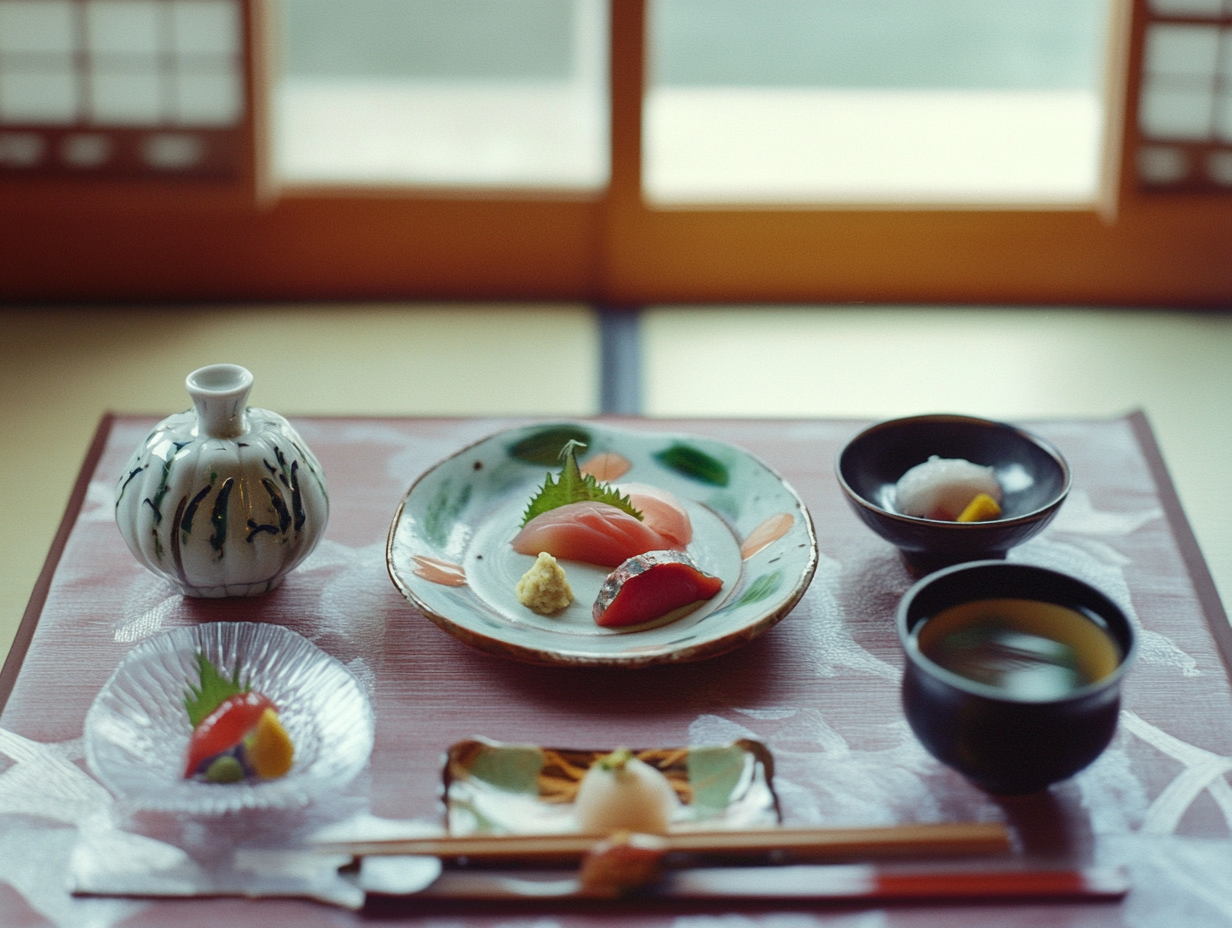
Kaiseki (懐石) represents the pinnacle of Japanese haute cuisine, an art form that goes far beyond mere sustenance to embody the philosophical principles of balance, seasonality, and mindful appreciation. This centuries-old culinary tradition, born from the tea ceremony, has evolved into what many consider the world's most refined dining experience.
Origins and Philosophy
The term "kaiseki" originally referred to the warm stones Buddhist monks would place in their robes to ward off hunger during long meditation sessions. Today, it represents a multi-course meal that embodies several core Japanese cultural concepts:
- Shun (旬): The principle of seasonal ingredients at their peak
- Wabi-sabi (侘寂): Finding beauty in simplicity and imperfection
- Omotenashi (おもてなし): The spirit of selfless hospitality
The Structure of Kaiseki
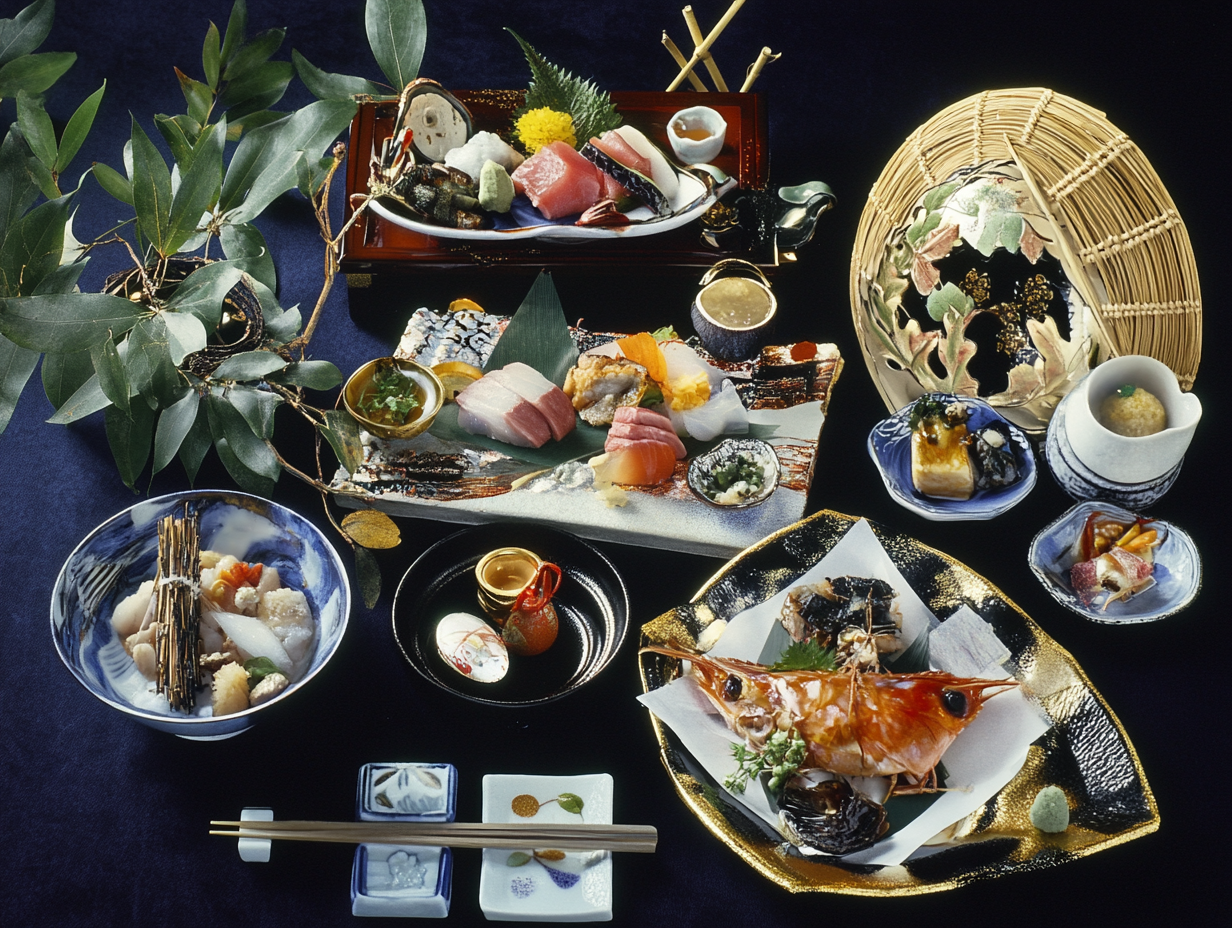
A traditional kaiseki meal follows a carefully choreographed sequence, with each course designed to create a harmonious progression of flavors, textures, and visual presentations.
Traditional Course Sequence
- Sakizuke (先附): An appetizer that sets the meal's tone
- Suimono (吸物): A delicate clear soup
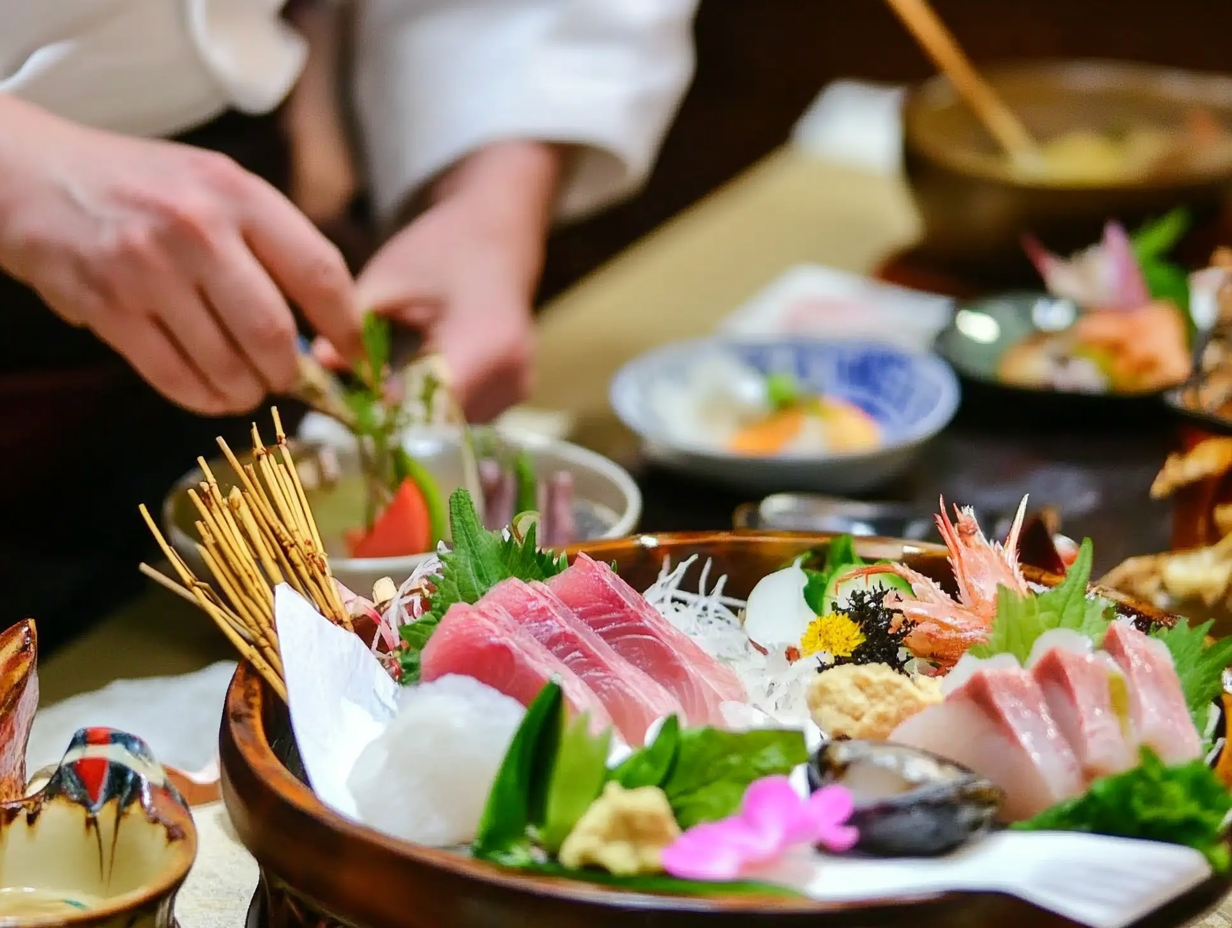
- Mukōzuke (向付): Seasonal sashimi
- Hassun (八寸): A seasonal expression of land and sea
- Futamono (蓋物): A "lidded dish," typically a soup
- Yakimono (焼物): Grilled seasonal ingredients
- Takiawase (煮合): Vegetables and meat/fish simmered separately
- Su-zakana (酢肴): A palate cleanser
- Mizumono (水物): A light dessert
Find Your Kaiseki Experience
Browse ryokans renowned for their authentic multi-course kaiseki dining.
View Top Luxury RyokansThe Art of Presentation
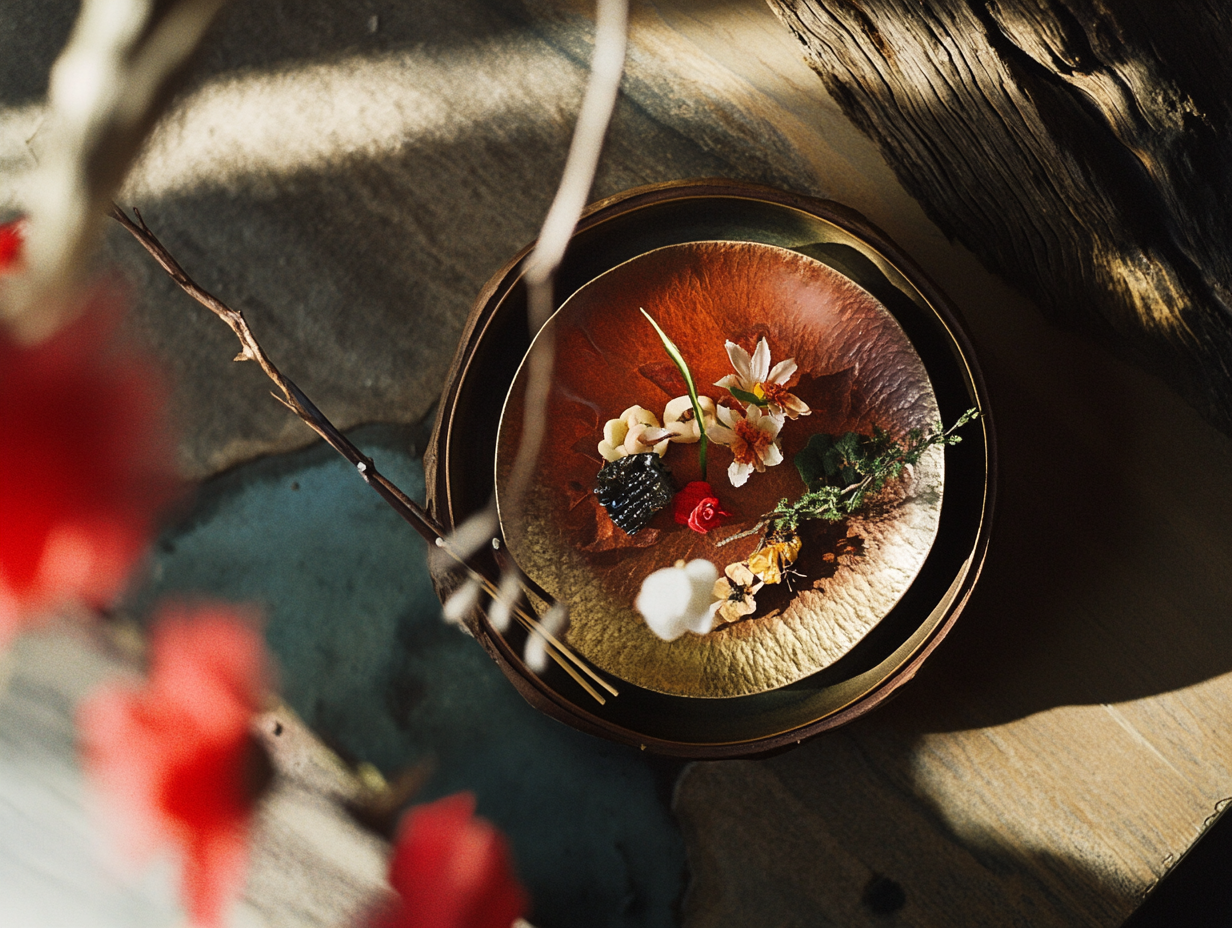
In kaiseki, visual presentation is equally important as taste. Each dish is carefully composed according to several key principles:
Visual Elements
- Color Balance: The traditional five colors (green, red, yellow, black, and white)
- Seasonal References: Through ingredients and garnishes
- Plating Design: The arrangement follows specific aesthetic rules
- Vessel Selection: Each dish is served in carefully chosen ceramics
Seasonal Expressions
Each season brings its own unique ingredients and presentations to kaiseki dining:
Spring
- Cherry blossom-inspired arrangements
- Young bamboo shoots
- Spring vegetables
Summer
- Refreshing presentations with glass vessels
- Cold soups
- Light, cooling ingredients
Autumn
- Maple leaf garnishes
- Mushrooms and root vegetables
- Hearty broths
Winter
- Warm, comforting dishes
- Snow-scene inspired presentations
- Preserved ingredients
Want to experience kaiseki? The best way is a ryokan stay where dinner is included. Browse our top-rated ryokans in Kyoto — Kyoto has the highest concentration of kaiseki-serving properties in Japan. Book on Agoda or Booking.com directly from each listing.
The Role of Kaiseki in Ryokan Dining
In a ryokan setting, kaiseki takes on additional significance as part of the overall hospitality experience:
- Served in the privacy of your room
- Timed perfectly with your schedule
- Incorporating local specialties
- Enhanced by the traditional setting
Modern Interpretations
While deeply rooted in tradition, kaiseki continues to evolve:
Contemporary Innovations
- Fusion elements incorporating international influences
- Modern plating techniques
- New ingredient combinations
- Creative presentation vessels
However, even these modern interpretations maintain the core principles of:
- Seasonality
- Balance
- Progression
- Harmony
Etiquette and Appreciation
To fully appreciate kaiseki, consider these guidelines:
- Timing: Take time to observe each dish before eating
- Order: Follow the presented sequence
- Portions: Finish each course completely
- Appreciation: Acknowledge the craftsmanship
The Future of Kaiseki
As global interest in Japanese cuisine grows, kaiseki faces both opportunities and challenges:
- Preserving traditional techniques while embracing innovation
- Training new generations of kaiseki chefs
- Adapting to changing dietary preferences
- Maintaining authenticity while reaching new audiences
Conclusion
Kaiseki dining represents more than just a meal—it's a journey through Japanese culture, aesthetics, and philosophy. Whether experienced in a traditional ryokan or a modern restaurant, it offers a window into the Japanese soul, where food becomes art and dining becomes meditation.
For travelers to Japan, a kaiseki meal provides not just sustenance, but a profound cultural experience that engages all the senses and leaves an indelible impression of Japanese hospitality at its finest.
Note: When booking a kaiseki experience, be sure to inform the restaurant of any dietary restrictions in advance, as traditional kaiseki meals typically feature a fixed menu.
The best place to experience kaiseki is at a traditional ryokan, where dinner is served in your room as part of the overnight stay. Browse our highest-rated ryokans in Japan — all include multi-course kaiseki dinner. For a luxury kaiseki experience, see our luxury ryokan picks, where the culinary programme is often the centrepiece of the stay. Check availability on Agoda or Booking.com from each listing page.
Free ryokan planning guide
Japan travel tips, etiquette essentials, and our top picks — straight to your inbox.
Experience Kaiseki at These Ryokans
Top-rated ryokans renowned for authentic multi-course kaiseki dining
Ready to book your ryokan?
Check dates, rooms and current rates for ryokans across Japan.
Planning a ryokan stay?
Get our free Japan ryokan planning guide — packing tips, etiquette, and our top picks by region.
No spam. Unsubscribe anytime.
Megumi Faibisch Kühn
Japan travel expert with a passion for traditional ryokans and Japanese culture.