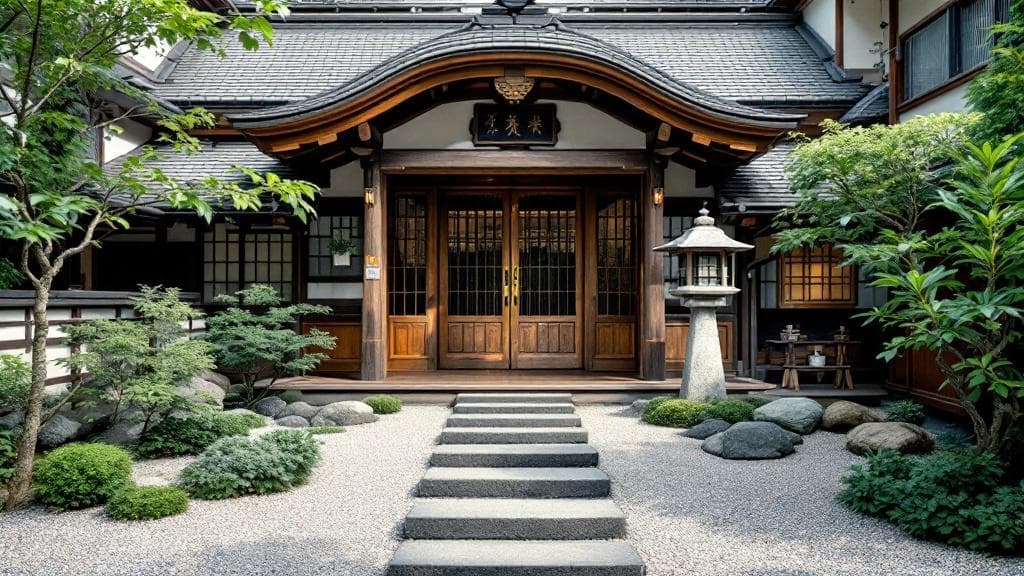
Ryokan vs Hotel Japan
The ryokan vs hotel debate is one of the first decisions travelers face when planning a Japan trip. Both offer comfortable accommodation, but they deliver completely different experiences. This guide breaks down every dimension of the comparison so you can make the right call for your trip.
The Core Difference
Ryokan
A ryokan is a cultural experience first, accommodation second. You're not just renting a room — you're entering a centuries-old tradition of Japanese hospitality. Everything is curated: the room, the meals, the bathing ritual, the service. It requires some participation.
Hotel
A hotel is accommodation with services. It's flexible, familiar, and well-suited to travelers who want a comfortable base while they explore. No customs to navigate, no set meal times, no communal bathing. It stays out of your way.
Side-by-Side Comparison
| Ryokan | Hotel | |
|---|---|---|
| Sleeping arrangement | Futon on tatami mat | Western bed |
| Meals included | Yes — dinner & breakfast (nippaku nishoku) | Usually no (some exceptions) |
| Bathing | Communal onsen / private hot spring bath | Private bathroom shower/tub |
| Dress code in property | Yukata (provided cotton kimono) | Your own clothes |
| Service style | Dedicated nakai-san attendant | Front desk + housekeeping |
| Architecture | Traditional Japanese — tatami, shoji, wood | Modern or Western-influenced |
| Price range | ¥15,000–¥80,000+ per person per night | ¥5,000–¥50,000 per room per night |
| Location options | Rural hot spring towns, mountains, coast, urban | Primarily urban, airports, major cities |
| Flexibility | Set meal times, structured experience | Eat whenever, come and go freely |
| Cultural immersion | High — designed around Japanese customs | Low to moderate |
| Booking lead time | Weeks to months for popular properties | Days to weeks typically sufficient |
| Tattoo-friendly | Often restricted in communal baths | No restrictions |
Cost Comparison
A ryokan appears more expensive at first glance, but the comparison isn't straightforward. Ryokan rates typically include:
- Dinner (a full kaiseki meal worth ¥8,000–¥25,000 at a restaurant)
- Breakfast (a full Japanese breakfast worth ¥2,000–¥5,000)
- Unlimited onsen access
- Yukata, toiletries, and amenities
- Personalized attendant service
When you add up two restaurant meals at equivalent quality, onsen admission, and the intangible value of the experience, mid-range ryokans (¥20,000–¥35,000 per person) are competitive with business hotels once meals are factored in.
Budget travelers: there are affordable ryokans starting around ¥7,000–¥10,000 per person, particularly in rural areas. These won't have private onsen or premium kaiseki, but they deliver the core experience at accessible prices.
When to Choose a Ryokan
You want to experience traditional Japan, not just visit it
You're visiting a hot spring destination (Hakone, Kinosaki, Beppu, Kusatsu, Arima Onsen)
It's a special occasion — anniversary, honeymoon, milestone birthday
You want to slow down for 1–2 nights after a busy city itinerary
You're curious about Japanese cuisine and want kaiseki in its proper context
You're traveling with someone who has never been to Japan and wants the "full experience"
When to Choose a Hotel
You're on a tight budget with no flexibility for meal inclusion
You have significant dietary restrictions that can't be accommodated by kaiseki
You're traveling with young children who won't appreciate multi-course dining
You want flexibility to dine out, come home late, and move freely
You're staying in a major city and doing day trips — a central hotel makes more logistical sense
You're uncomfortable with communal bathing and the property has no private bath option
You have visible tattoos and haven't found a tattoo-friendly ryokan
The Hybrid Approach
Most Japan itineraries benefit from a mix. A common structure:
City Days
Tokyo, Osaka, Kyoto city center
Hotel — flexibility for exploring, late nights, dining out
Ryokan Night(s)
Hakone, Nara, Arima Onsen
Ryokan — 1–2 nights to decompress and experience traditional Japan
Rural / Nature
Kiso Valley, Shirakawa-go
Either works — minshuku (family ryokan) common here
The Verdict
If you're visiting Japan for the first time: stay at a ryokan for at least one night. It's among the most distinctly Japanese experiences available to travelers and genuinely unlike anything you'll find anywhere else in the world.
If you're returning or on a longer trip: build your itinerary around a mix. Hotels for city exploration, ryokans for the moments you want to remember.
Find Your Ryokan
Top-rated properties across Japan — ready to book
Ready to book your ryokan?
Check dates, rooms and current rates for ryokans across Japan.