Ryokan itineraries
For a first trip, take Tokyo, Hakone and Kyoto in 7 nights; it needs no Japan Rail Pass. For a second trip or a winter one, the Kansai loop puts two nights in Kinosaki’s bathhouse town between Kyoto and Arima, and a 5-day Kansai WIDE Area Pass just pays. For somewhere quieter, the Shikoku circuit runs from Kotohira through the Iya Valley and Kochi to Dogo Onsen, on single tickets.
By Meg Faibisch Kühn · Updated
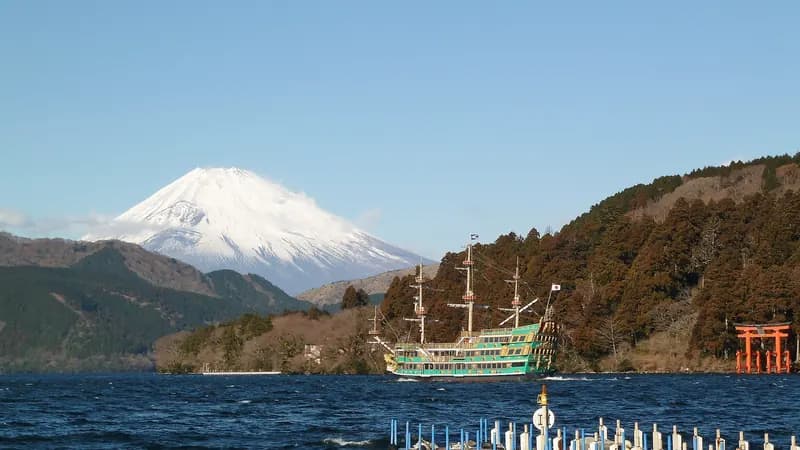
Tokyo, Hakone and Kyoto
7 nights, or 5 in the shorter version
Shinjuku, Tokyo 2 · Gora, Hakone 2 · Kyoto 3
3 inns linked, a rail pass verdict and sourced fares.
See the routePhoto: Quercus acuta / Wikimedia Commons, CC0, cropped and resized
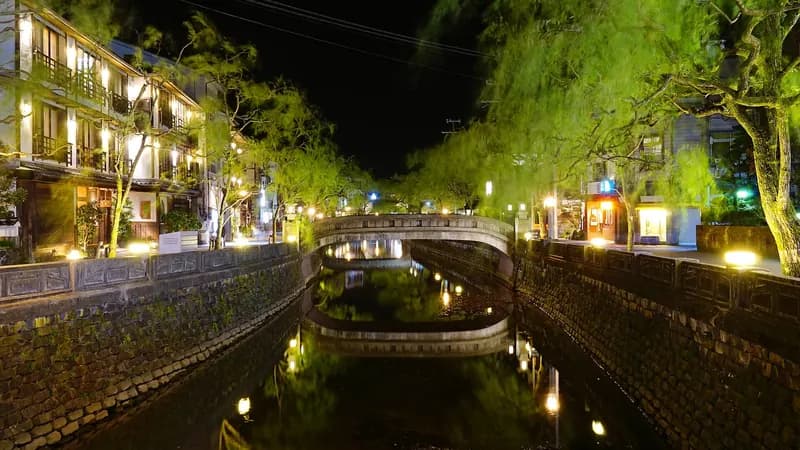
Kyoto, Kinosaki and Arima
6 nights, or 5 in the shorter version
Kyoto 3 · Kinosaki Onsen 2 · Arima Onsen 1
3 inns linked, a rail pass verdict and sourced fares.
See the routePhoto: 663highland / Wikimedia Commons, CC BY 2.5, cropped and resized
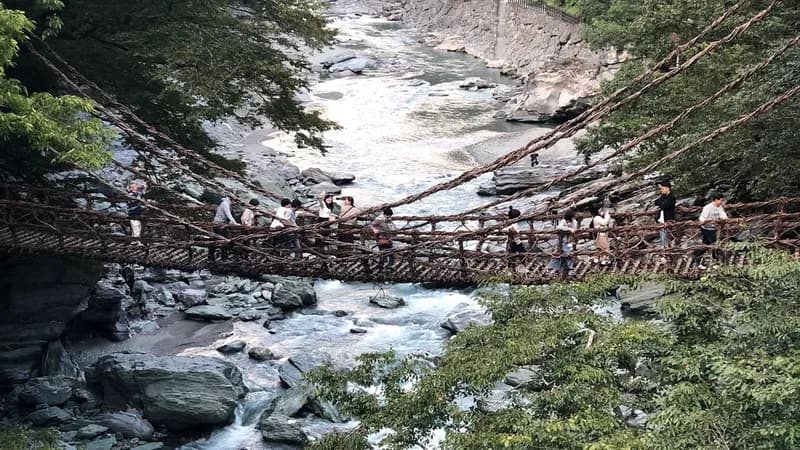
Shikoku circuit
7 nights, or 5 in the shorter version
Kotohira 1 · Iya Valley 2 · Kochi 2 · Dogo Onsen, Matsuyama 2
4 inns linked, a rail pass verdict and sourced fares.
See the routePhoto: Meg Faibisch Kühn / Ryokan Finder
Questions
Do I need a Japan Rail Pass for these routes?
No. At ¥50,000 for 7 days, the pass costs more than the JR fares on each route: about ¥14,500 on Tokyo, Hakone and Kyoto, about ¥15,650 on the Kansai loop and ¥6,050 by train in Shikoku. It pays only when long Shinkansen rides are added in the same week.
Which regional passes pay on these routes?
The 3-day Hakone Freepass from Shinjuku, ¥7,500, on the Hakone nights, and the 5-day Kansai WIDE Area Pass, ¥12,000, on the Kansai loop if you start it on the Nara day. The ALL SHIKOKU Rail Pass does not pay on the Shikoku circuit, because its legs fall over six days.
How many nights should I spend at each ryokan?
Two where you can: these routes give two nights to Hakone, Kinosaki, the Iya Valley, Kochi and Dogo Onsen, so one full day falls between arriving and leaving. Arima and Kotohira get one night each, as a stop between legs.
What do I do with my luggage between ryokans?
Send big cases ahead by takkyubin. Yamato’s TA-Q-BIN delivers in a day or two, for parcels up to 200 cm and 30 kg, and most hotels arrange it at the front desk. Carry one small bag to Hakone and into the Iya Valley.
How were the inns on these routes chosen?
Each night is an inn from our directory near that day’s station or sight, with a second at a different price tier where the directory has one. The reasons given are facts checked on each inn’s own site or its town’s official page, not ratings.