← All Comparisons

Ryokans for Snow Crab Season

Our top three picks: Kinosaki Onsen Nishimuraya Honkan in Toyooka: Crab plans run 7 November to 31 March. Awara Onsen Kofu Yuden Beniya: In Fukui the male snow crab is Echizen crab. Shourotei Hotel in Miyazu, with private onsen baths. All 6 are compared below.

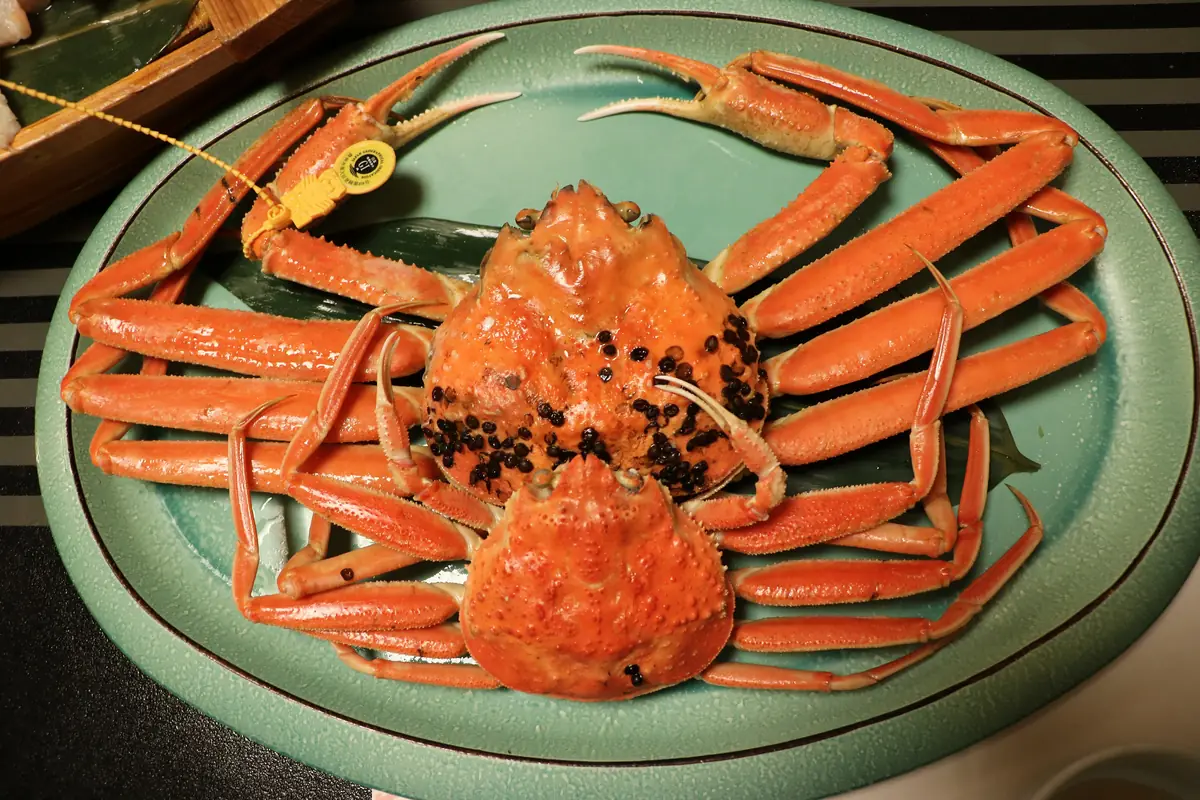
Snow crab fishing on the Sea of Japan opens on 6 November, and within days the inns along the coast switch their dinners to crab, which they serve into March. The males are sold under local names: Matsuba crab in Hyogo and Kyoto, Echizen crab in Fukui. A crab landed at a named port carries that port's coloured tag, blue for Tsuiyama, which is how an inn shows you where yours came from. These six inns publish crab plans for the 2026-27 season on their own sites. The notes say how much crab each plan serves, where you eat it and who the inn takes. For the other great winter dinner, torafugu in western Japan, see the fugu page.

By · Updated · How we choose inns

A boiled male and female Echizen snow crab served on a plate in Fukui

Photo: さかおり / Wikimedia Commons, CC BY-SA 4.0, cropped and resized

Ryokans for Snow Crab Season, ranked
#RyokanLocationPricePrivate onsen
1Kinosaki Onsen Nishimuraya HonkanToyookaLuxuryYes
2Awara Onsen Kofu Yuden BeniyaAwaraPremiumYes
3Shourotei HotelMiyazuLuxuryYes
4Mikiya RyokanToyookaPremiumYes
5Ginka - Kinosaki Maruyamagawa OnsenToyookaPremiumYes
6Kinosaki YamamotoyaToyookaPremiumYes
Kinosaki Onsen Nishimuraya Honkan#1

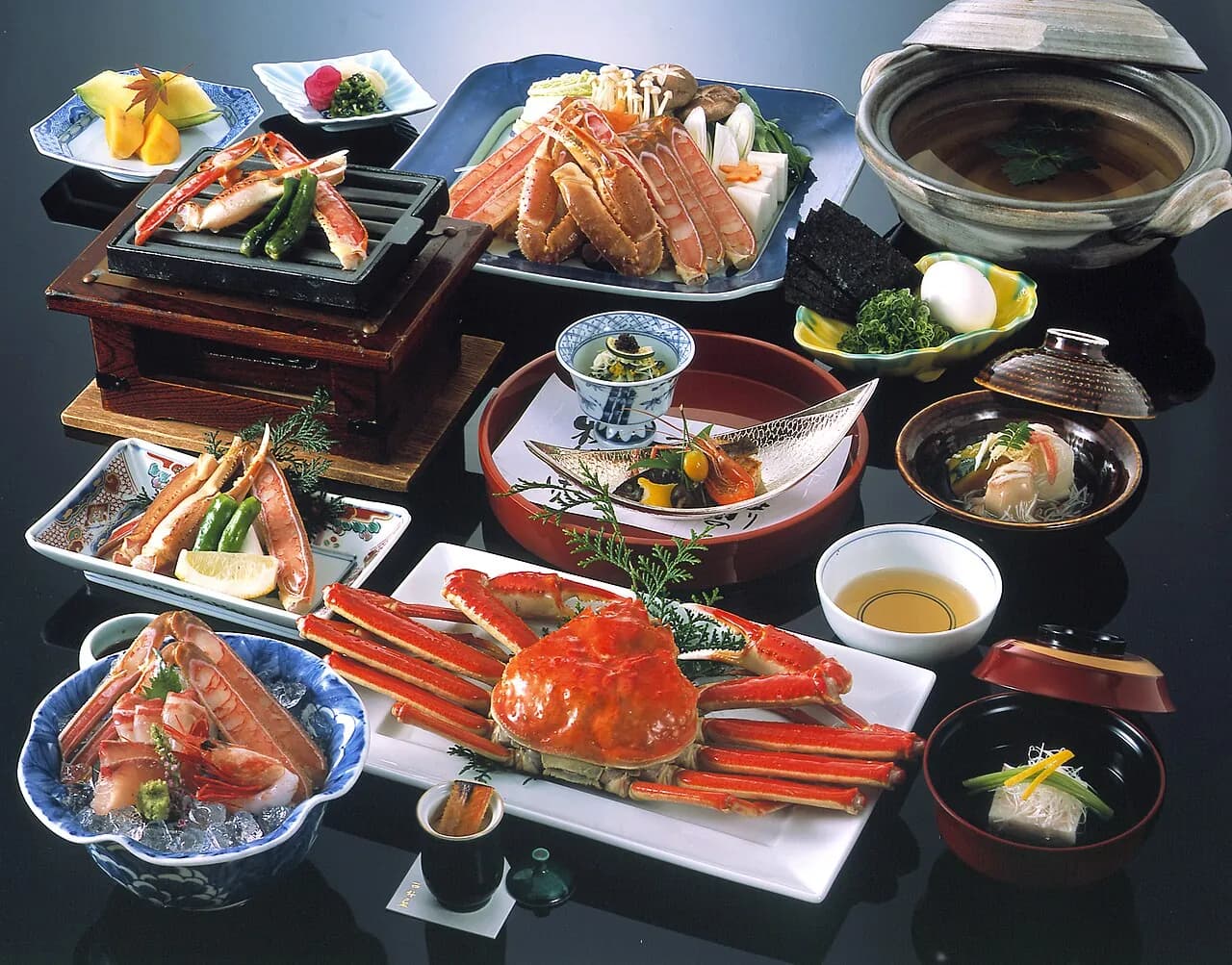
Crab plans run 7 November to 31 March. The Matsuba crab kaiseki uses about one crab per guest, as sashimi, boiled and steamed, alongside Tajima beef; the kani-zukushi course uses about one and a half and ends with crab shabu-shabu and rice porridge. A menu using only crab from Tsuiyama, the port just down the river, is booked by phone. Guests must be 10 or older.

Private OnsenSodium chloride spring (chloride spring)Luxury travelers seeking Japan's finest traditional ryokan experience
  • Over 160 years of history through seven generations - Relais & Chateaux member
  • Free passes to all seven of Kinosaki's legendary public bathhouses
  • In-room kaiseki dinner featuring Tajima regional cuisine

Recommended stay: 2 nights to fully explore all seven bathhouses and enjoy multiple kaiseki meals

Awara Onsen Kofu Yuden Beniya#2

In Fukui the male snow crab is Echizen crab. Beniya keeps its own tank for crab landed at Mikuni and Echizen ports, and its main plan (7 November to 31 March) is one crab of about 1 kg per guest, boiled whole or as sashimi with the shell grilled. Dinner is served in your room, and all 17 rooms have a semi-open-air bath filled from the inn's own spring.

Private OnsenSodium chloride, calcium chloride spring (isotonic neutral high-temperature)Couples seeking romantic hot spring retreat
  • One Michelin Key recognition
  • All 17 rooms with private semi-open-air baths
  • In-room kaiseki with seasonal Fukui ingredients

Recommended stay: 2 nights for ryokan plus day trips to Tojinbo or Eiheiji. One night sufficient for onsen and kaiseki.

Shourotei Hotel#3

Shourotei Hotel

Miyazu, Kansai

Luxury

Six rooms on a small cape beside the Amanohashidate sandbar. The crab kaiseki (10 November 2026 to 20 March 2027) uses local live Matsuba crab as sashimi, boiled with a crab-miso fondue, grilled and in shabu-shabu, then crab porridge, served in a private dining room. Children 12 and under are not taken.

Private OnsenRadium-containing iron(II)-sodium-chloride spring (Amanohashidate Onsen)Couples seeking a romantic seaside ryokan with one of Japan's most iconic views
  • Over 300 years of continuous hospitality since 1690, now in its 13th generation
  • Unobstructed views of Amanohashidate, one of Japan's three most scenic landscapes
  • Radium-rich Amanohashidate onsen with both indoor and outdoor bathing

Recommended stay: 1-2 nights to fully experience the onsen, kaiseki dining, and Amanohashidate exploration

Mikiya Ryokan#4

Mikiya Ryokan

Toyooka, Kansai

Premium

A wooden inn rebuilt in 1927 and registered as a cultural property, where the writer Shiga Naoya stayed. Winter dinners use tagged live crab from Tsuiyama or Shibayama; the top plan serves two crabs' worth across six dishes, one and a half of it live crab. Dinner is in the dining room, not your room, and there is no lift.

Private OnsenSodium-calcium chloride high-temperature spring (Kinosaki Onsen)Literature and history enthusiasts seeking a culturally rich ryokan experience
  • Over 300 years of continuous hospitality in the heart of Kinosaki Onsen
  • Literary heritage as the favored inn of novelist Naoya Shiga
  • Rare three-story wooden main building from 1927

Recommended stay: 1-2 nights

Ginka - Kinosaki Maruyamagawa Onsen#5

Sixteen rooms on the Maruyama River, a short drive from the Kinosaki onsen street. The crab course runs from 6 November to the end of March and uses two crabs per guest; you see your live crab on arrival and choose how it is cooked. Dinner is in private dining rooms or at a counter facing the river.

Private OnsenAlkaline simple thermal springCouples seeking a quiet riverside retreat
  • Four distinct types of natural hot springs including cypress baths
  • Stunning Maruyama River views from rooms and outdoor baths
  • Seasonal kaiseki with Tajima wagyu and winter crab courses

Recommended stay: 2 nights to enjoy the ryokan and explore Kinosaki Onsen town

Kinosaki Yamamotoya#6

Kinosaki Yamamotoya

Toyooka, Kansai

Premium

In the middle of Kinosaki's onsen street, close to the outer baths. Its winter course uses tagged Matsuba crab from the region's designated ports, from the 6 November opening, cooked by a head chef with 40 years in the kitchen.

Private OnsenHistoryCouples
A crab full course at Nishimuraya: a whole boiled snow crab, crab sashimi on ice, grilled legs and a hotpot
A crab full course at Nishimuraya, Kinosaki Onsen

Photo: Nishimuraya Kinosaki Onsen / Wikimedia Commons, CC BY 2.0, converted to WebP

Questions about this list

How are the ryokans on this page chosen?

The inns were picked by hand. Each is listed because its own website, or the local tourism association, railway or event organiser, publishes the plan, event or season dates this page describes, and we checked that source before listing it. If the top inn cannot be booked through one of our partners, the highest-placed one that can moves to first place. We do not show review scores, which come without a review count, and inns cannot pay to be listed or placed.

Which of these ryokans allow tattoos?

From each inn's own website: Kinosaki Onsen Nishimuraya Honkan and Kinosaki Yamamotoya allow tattoos in all baths; at Ginka - Kinosaki Maruyamagawa Onsen they are allowed in the private baths only; Awara Onsen Kofu Yuden Beniya does not allow them in the shared baths. We have not confirmed this for the other 2 inns on the page.

Which of these ryokans have an onsen bath in the room?

Every room has its own onsen bath at Awara Onsen Kofu Yuden Beniya, according to each inn's own website. We have not confirmed this for the other 5 inns on the page.

Do I need to reserve the private bath?

For the kashikiri (private, taken-in-turns) bath, you book a time slot at Ginka - Kinosaki Maruyamagawa Onsen and Kinosaki Yamamotoya; no booking is needed at Mikiya Ryokan; you use it when it is free. We have not confirmed this for the other 3 inns on the page.

What are check-in and check-out times at these ryokans?

Check-in is from 14:00 at Shourotei Hotel and Ginka - Kinosaki Maruyamagawa Onsen and from 15:00 at Kinosaki Onsen Nishimuraya Honkan, Awara Onsen Kofu Yuden Beniya, Mikiya Ryokan and Kinosaki Yamamotoya. Check-out is by 10:00 at Kinosaki Yamamotoya and by 11:00 at Kinosaki Onsen Nishimuraya Honkan, Awara Onsen Kofu Yuden Beniya, Shourotei Hotel, Mikiya Ryokan and Ginka - Kinosaki Maruyamagawa Onsen. These are the times each inn states on its own website.

More Comparisons

Plan Your Ryokan Stay