Temple stays in Japan (shukubo)
A shukubo is lodging run by a temple or shrine for pilgrims, now open to anyone.
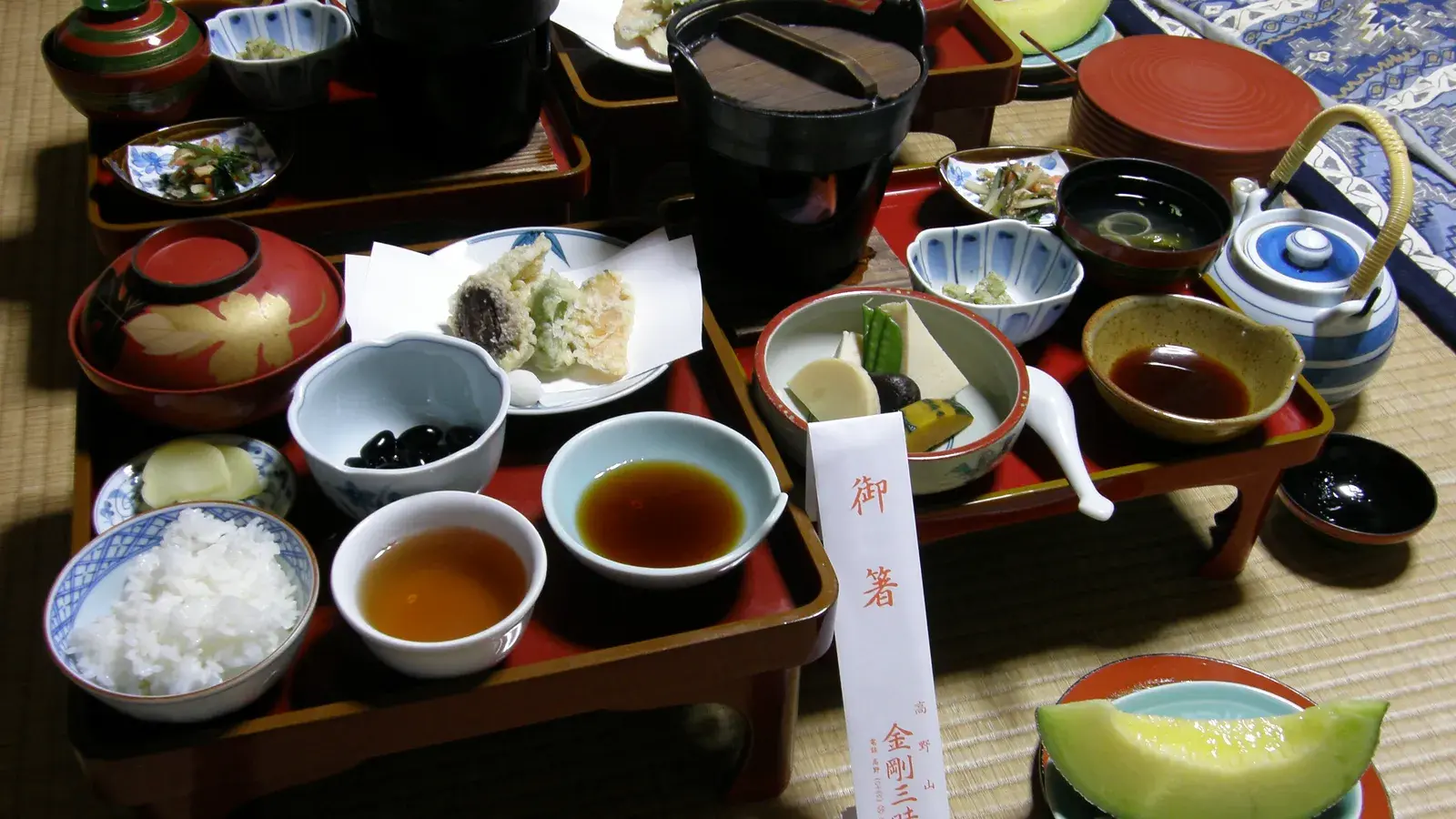
Photo: Szabolcs Arany / Wikimedia Commons, CC BY 2.0, cropped and resized
Expect a tatami room with futons, a shared bath at set hours, a vegetarian dinner early in the evening and a morning service you may join. On Koyasan a night with two meals starts from about ¥13,200; at Mount Haguro’s pilgrim lodges it is about ¥10,000 to ¥13,200.
Key facts
- Price with two meals
- Koyasan from ¥13,200 to ¥21,000 per adult in a standard room; Mount Haguro about ¥10,000 to ¥13,200
- The day
- Check in mid-afternoon, dinner about 17:30, bath by 21:00 or 22:00, morning service from 6:00 or 7:00
- Rooms
- Tatami rooms with futons, mostly without a private bath or toilet
- Curfew
- Varies: Fugen-in closes its gate at 21:00, Eko-in has none
Where to stay at a temple
- Wakayama · 6 lodgesKoyasanKoyasan has 51 temples that take overnight guests, all bookable through the Koyasan Shukubo Association. A night with a vegetarian dinner and breakfast starts from about ¥13,200 per adult at Hojo-in and runs to ¥21,000 and up at Eko-in. From Namba in Osaka it is about 80 minutes by Nankai train to Gokurakubashi, then 5 minutes by cable car.Read the guide
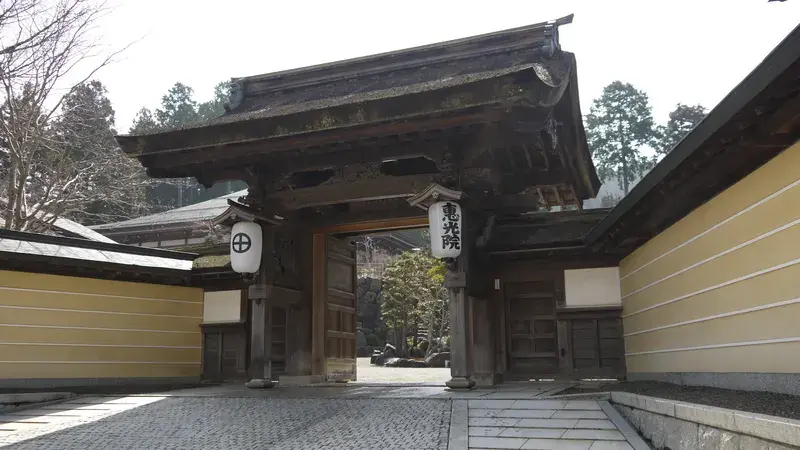
Photo: baggio4ever / Wikimedia Commons, CC BY 3.0, cropped and resized
- Yamagata · 4 lodgesDewa Sanzan (Mount Haguro)At the foot of Mount Haguro, the village of Toge has some 30 shukubo run by yamabushi families, and the shrine runs one more, Saikan, near the summit. A night with two meals is about ¥10,000 to ¥13,200. Most lodges book by phone, several close in winter, and rooms are often not lockable.Read the guide
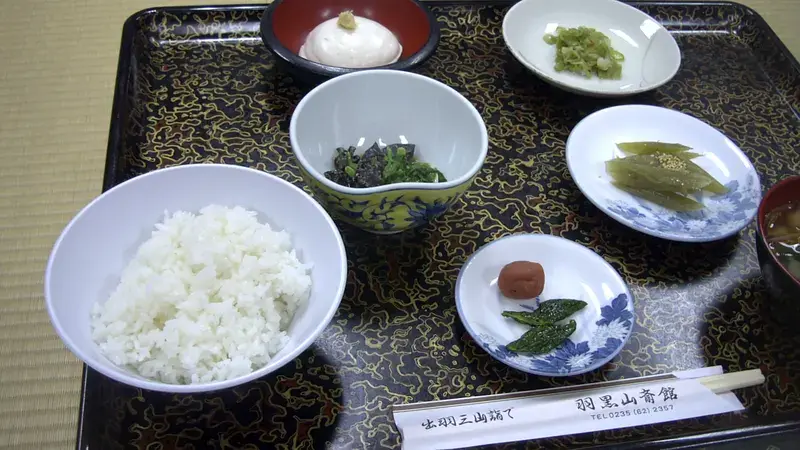
Photo: Rei / Wikimedia Commons, CC BY-SA 3.0, cropped and resized
What a shukubo is
Shukubo are lodgings attached to Buddhist temples and Shinto shrines, first for pilgrims and today for anyone. On Koyasan the lodge is the temple itself, and 51 temples take guests. In the Dewa Sanzan the lodges are family houses run by yamabushi, the mountain ascetics, each with its own altar. Faith is not required; Eko-in says people of every religion stay.
Sources: Daishinbo, official site; Koyasan Shukubo Association, official booking site; Eko-in: Shukubo and FAQ; Tsuruoka City tourism: Saikan. Checked Nov 2026.
What the stay is like
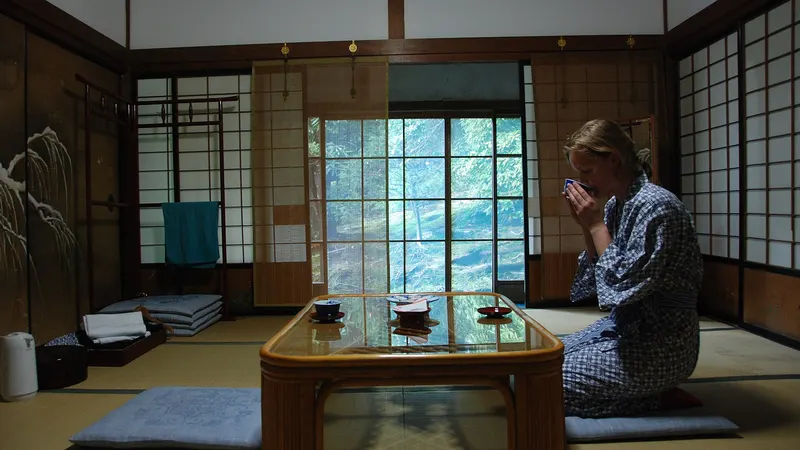
Photo: Maarten Heerlien / Wikimedia Commons, CC BY 2.0, cropped and resized
The day runs early. At Eko-in check-in opens at 14:00, meditation is at 16:30 and dinner at 17:30; the next morning the service is at 7:00, the fire ritual at 7:30, breakfast at 8:00 and check-out at 10:00. Other temples start earlier: Kodai-in and Fugen-in hold the service at 6:30, and Daien-in at 6:00. Arrive after about 18:00 and most temples cannot serve dinner; Eko-in and Fugen-in say the meal is not refunded.
A shukubo room is typically simple, with tatami and futons, and most standard rooms have no bath or toilet of their own. The shared bath keeps set hours, often 16:00 to 21:00 or 22:00 and not in the morning, and at small temples like Kodai-in men and women take turns. On Mount Haguro, rooms are often partitions of a larger hall and doors may not lock.
Sources: Eko-in standard plan, Koyasan Shukubo Association; Kodai-in standard plan and FAQ, Koyasan Shukubo Association; Fugen-in standard plan, Koyasan Shukubo Association; Hojo-in standard plan, Koyasan Shukubo Association; Daien-in standard plan, Koyasan Shukubo Association; Tsuruoka City tourism: Saikan; Japan Tourism Agency: Shukubo lodgings on Mt. Mitake. Checked Nov 2026.
Shojin ryori
Shojin ryori is Buddhist temple cooking without meat or fish. Kodai-in’s contains no meat, seafood, eggs or dairy. Fudo-in’s dinner adds about 13 dishes to Koya tofu, a seasonal stew and tempura, and Eko-in offers a gluten-free plan. Children are sometimes served something else: Kodai-in gives under-10s a children’s menu with meat and fish.
The pilgrim lodges of the Dewa Sanzan cook from the mountain, with wild vegetables, mushrooms and sesame tofu, but fish can appear there; ask if you eat none.
Sources: Kodai-in standard plan and FAQ, Koyasan Shukubo Association; Fudo-in standard plan, Koyasan Shukubo Association; Eko-in plans, Koyasan Shukubo Association; Daishinbo, official site. Checked Nov 2026.
Morning prayers and the goma fire ritual
Guests may join the morning service in the main hall; it is not required. The goma (homa) is a fire ritual of esoteric Buddhism, which Eko-in traces to teachings Kobo Daishi brought back from Tang China. At Eko-in it follows the service every day at 7:30 in the Bishamon hall, free for guests without booking. Fugen-in allows photos of its service but not with flash. Fudo-in follows its service with about 20 minutes of ajikan meditation.
Sources: Eko-in: Experience temple life; Fugen-in standard plan, Koyasan Shukubo Association; Fudo-in standard plan, Koyasan Shukubo Association. Checked Nov 2026.
Etiquette and house rules
Arrive in time for dinner, and tell the temple if you will be late. Learn the curfew: Fugen-in’s gate shuts at 21:00. Every room at Eko-in is non-smoking, with a smoking spot outdoors. Tell the temple about allergies in advance. Carry cash for anything extra, such as sutra copying, a goshuin stamp or drinks; the association says on-site extras are paid in cash.
If you copy a sutra and want it dedicated at Okunoin, Eko-in asks a ¥1,000 offering; dedicating it at the temple itself is free.
Sources: Hojo-in standard plan, Koyasan Shukubo Association; Fugen-in standard plan, Koyasan Shukubo Association; Eko-in: Shukubo and FAQ; Eko-in: Experience temple life; Koyasan Shukubo Association: FAQ. Checked Nov 2026.
Who a temple stay suits
It suits early risers, solo travellers and anyone curious about Buddhist or mountain worship. Eko-in and Daishinbo both say women travelling alone are welcome, and Eko-in has English-speaking staff. It suits less well if you need step-free rooms: Kodai-in says it is not barrier-free, and some of Eko-in’s rooms are upstairs. The day starts early, with the service at 6:00 to 7:00.
Sources: Eko-in: Shukubo and FAQ; Daishinbo, official site; Kodai-in standard plan and FAQ, Koyasan Shukubo Association; Eko-in standard plan, Koyasan Shukubo Association. Checked Nov 2026.
Other places with shukubo
Closer to Tokyo, Mount Mitake in Ome has 24 shukubo near the summit, run by families who have served Musashi Mitake Shrine as priests for generations. The Japan Tourism Agency notes that most serve seasonal food such as fish from the Tama River and mountain vegetables, so do not expect a vegetarian menu. We have not written a guide to them yet.
Source: Japan Tourism Agency: Shukubo lodgings on Mt. Mitake. Checked Nov 2026.
Temple stay questions
Do I need to be Buddhist to stay at a temple in Japan?
No. Shukubo began as lodging for pilgrims but now take any guest. Eko-in on Koyasan says people of all religions and denominations stay, and Daishinbo on Mount Haguro says it welcomes people from all walks of life.
How much does a temple stay cost?
With a vegetarian dinner and breakfast, the Koyasan temples here start from ¥13,200 to ¥21,000 per adult in a standard room, tax included. The pilgrim lodges on Mount Haguro are about ¥10,000 to ¥13,200 per person. Rooms with their own bath cost more.
Is temple food vegan?
Often, but ask. Kodai-in’s shojin ryori has no meat, seafood, eggs or dairy. In the Dewa Sanzan, fish sometimes appears on the shojin menu. Tell the temple your diet when you book.
How far ahead can I book a Koyasan temple?
On the Koyasan Shukubo Association’s site, about six months (180 days) ahead, depending on the plan. Some temples open earlier on their own sites; Eko-in takes bookings 11 months ahead.
Is the Okunoin night tour included in a Koyasan stay?
No. It is run separately by Awesome Tours and booked on its own; Eko-in, which is the meeting point, says it often sells out from March to November.
Facts on this page checked on the temples’ own sites, the Koyasan Shukubo Association and local tourism offices. We have not stayed at these temples ourselves.